Monday, November 30, 2015

The Mecca

As a big fan of "South Park," I was extremely excited for my first trip to the Big Apple, around Christmas in 2013, to be accompanied by a visit to Broadway to see “The Book of Mormon.”  My mother and I were fortunate enough to land returned tickets the day of the show, a rarity for a show on Broadway according to the ticket office.

As expected, the play was similar to the television show in its content, just presented in a different manner. It was sacrilegious, a bit offensive, and yet hilarious, just like 90 percent of all "South Park" episodes. "South Park" has poked fun of many religions in past episodes, and the Mormon religion is no exception, being put under the satiric spotlight in an episode titled “All About Mormons.” This was one of the funniest episodes of the show’s history and sparked my interest in seeing the stage version. I was a little bummed to not see a real life depiction of Eric Cartman, but this did not take way from the play’s quality. Although the show is more entertaining to me as I am not a big fan of musicals, I still had several laughs throughout the play.

There is an indescribable aura accompanied with sitting in the world-renowned Times Square watching a Broadway show. These are the best of the best right in front of your face. On my next trip to New York City, I hope get a chance to see “The Lion King,” my favorite childhood movie. If the experience is anywhere near as enjoyable as “The Book of Mormon,” it will be well worth the trip.

Sunday, November 29, 2015

"The Girl on the Train" by Paula Hawkins

The best books are the ones that you pick up and cannot seem to put it down until you’ve read it from start to finish. That is exactly what happened when I started reading “The Girl on the Train” by Paula Hawkins. It has been labeled as the next “Gone Girl” due to its similar surprising twists and turns throughout the novel. What I really enjoyed about this book was the way it alternated points of view between three women, giving you the opportunity to get to know these characters even though they were so different (yet so intertwined in each other’s lives).

The book is centered on 32-year-old Rachel Watson and the obsession she has with a couple she notices while going to work on a train. I say "going to work," but in reality, she has been fired for months and still rides the train into town. Yes, this woman is a bit strange, and we notice that from the very beginning. She drinks multiple gin and tonics on the way to town everyday, still struggling to fight her alcoholism. As her life continues to go downhill because of a divorce, she becomes attached with the couple she sees and even makes up names for them. One day she realizes that the woman she always looks at, Megan, is missing, and Rachel bizarrely decides to figure out where she went.

Even though this book bounces around the three different women, Rachel is the main focus of the story. She comprises the majority of the “pre-missing” section, and it’s quite simple to become attached to her and the horrible things she has gone through in her life. I almost felt for her at the times when she would call her ex-husband, Tom, trying everything to get him back. Unfortunately for Rachel,  she finds out that he was cheating on her and then decided to stay in the house they lived in together with his former mistress, Anna. It is a weird turn of events, and it really puts it into perspective of what a struggle Rachel is having with her life.

As the novel unfolds, it is a total mystery as to what happened to Megan and I was left guessing every few pages. Is she dead? Did she run away? Could it be something as silly as going on vacation but Rachel, being the drunk that she is, has an alternate reality? It sounds a bit farfetched, but with how the story was being told, I had no idea. Almost every character in the story was a possible culprit to me, and I will honestly say that I had no idea the ending would be as crazy as it was. Even after hearing comparisons to “Gone Girl,” I finished the last few pages and dropped the book with my mouth open because it was so shocking.

This book definitely goes down as one of the better books I’ve read in recent years, and one that I would recommend to anyone who has a few hours to kill. It isn’t a long book, only about 300 pages, and can easily be done in one day if you put your mind to it. The only issues I had were the way the book jumped around at times. Sometimes it was a bit confusing when the point of view would change to Rachel present-day and then Megan from two years ago. Even with the dates listed at the start of the chapter, I had to give my mind a second to get into the right setting of what is going on.

Wednesday, November 25, 2015

5 Movies Better Than The Books

"Wild" by Cheryl Strayed

I may be alone in this, but I could not handle Cheryl Strayed's book “Wild.” It was a devastating account of one woman’s life spiraling out of control after her mother passes away. She has multiple extramarital affairs, a divorce, an unplanned pregnancy and a heroin addiction—the dismal list goes on and on. I would never re-read the book again, nor would I recommend it to a friend. There is a particularly difficult scene to get through in the book, where Cheryl is unsuccessful in humanely putting down her mother’s beloved horse, that still haunts me to this day. Luckily, the movie only briefly touched on this. Naturally, I was hesitant to go see the movie, but I have to say that Reese Witherspoon did a phenomenal job bringing this story to life. I thought the movie knocked one out of the park, and I truly think it was better than the book.


"Lord of the Rings" by J.R.R Tolkien

J.R.R. Tolkien created one of the very best fantasy worlds of all time. There were hundreds of meaningful characters across the Lord of the Rings series, each with an extremely unique background and family history. There is Aragorn, heir to the kingdom of Gondor, as well as Gimli, son of a man who accompanied Bilbo Baggins on the adventure in The Hobbit. Among many more, there is also Frodo Baggins, a relatively normal human who did anything but the norm. As great as the books were, the movies certainly pushed Tolkien’s work into an all-time status. This isn’t a knock at Tolkien at all; the languages and lands he created were remarkable. But the movies brought everything to life and showed how magnificent the world and characters really were. The hobbits are so tiny they can run directly underneath horses, whereas the orcs they are running from are so tall it seems as if they can smash the hobbits under their feet. Throw in a dark lord who knocks back hundreds of men with a single swipe of his mace, and you have a pretty awesome fight scene. To further illustrate how great these movies were, the final movie, Return of the King, earned 11 Academy Awards, one of the highest amounts for a single movie ever. They are in discussion for one of the best movie trilogies of all-time.


"The Outsiders" by S.E. Hinton

Patrick Swayze, Matt Dillon, Rob Lowe and Tom Cruise all play prominent roles in the movie. With this much star power, how could the movie disappoint? All four of these actors would go on to have successful careers in Hollywood. With the brilliance of their acting in the film, it really is no surprise. All of the characters fit their descriptions in the book precisely how I pictured them. It seems as though Swayze’s character in "Dirty Dancing," arguably his best film, jumped straight into this film with his greased back hair and athletic build. The book is a classic as well, even though it is a young-adult book and on the reading list for middle school students. I was required to read it in the eighth grade, and the book caught my attention, a rarity for my young self who did not want to read because it wasn’t “cool” at the time. However, the movie was even better. I still shed a tear or two each time little Johnny drops the “Stay golden, Ponyboy” monologue at the end, and I’ve seen the movie at least a dozen times.


"The Devil Wears Prada" by Lauren Weisberger

Sometimes it takes an actor to really bring a character to life. Meryl Streep did that for Lauren Weisberger's Miranda Priestly in "The Devil Wears Prada." In the book, Miranda doesn't make you love to hate her—you just hate her. More than half of the book is just establishing that fashion magazine editor Miranda Priestly (based on Weisberger's year with the infamous Vogue editor, Anna Wintour) is a snobby, stone-cold bitch who doesn't deign to stand in line for her own Starbucks or even hang up her own coat. Unlike in the movie adaptation, you never seem to find any whisper of a redeeming quality in her. That goes double for Andrea Sachs, Miranda's new second assistant, who comes across as so entitled and self-important that it's hard to ever feel bad for her. With Anne Hathaway playing the part, Andy's disinterest in fashion is somewhat forgivable, and she slowly finds herself assimilating to the office culture until she realizes she's turned into a Miranda clone. On the other hand, Book Andy is as much of a snob as Miranda, so it's really no surprise when she realizes her personal life is in shambles and she's become exactly like her boss.


"Jurassic Park" by Michael Crichton

Creating a movie that brings dinosaurs to life troubled filmmakers for several years. It was nearly impossible to create these creatures and have similar qualities to what we believe they were like millions of years ago. This film does the perfect job of showing the audience exactly how large, fast and terrifying these animals really were. The tagline for the film, "An adventure 65 million years in the making," really makes you pause and think about how separated humans are from these dinosaurs. Now the book obviously set the path for this movie, and it was an overall good book. The idea of taking dinosaurs' DNA from fossilized gnats and ticks (although it is a mosquito in the film) is a perfect concept of science fiction. Add in the terror of gigantic animals running at you and trying to devour your body and it's a great novel. However, the real difference between the film and the book is the believability in the dinosaurs. Reading about the creatures was never anything that took my breath away, but the scene in the film where they all see the dinosaurs for the first time gives you an audible "wow" at how magnificent the film is.

Tuesday, November 24, 2015

An Overlooked Theme in Mrs. Packard

Many interpret Emily Mann’s primary goal in “Mrs. Packard” as promoting women’s rights and the feminist movement. Even Joelle RĂ© Arp-Dunham, the director of UGA’s rendition of the play, focuses strictly on the movement in the production notes. However, there was an issue that stood out even more so than feminism. That would be religion, which “excites the mind like no other,” as one witness in Elizabeth Packard’s case would claim.

Mrs. Packard has an issue with the teachings of her husband’s old Calvinist beliefs. She wants to head across the street to the Methodist church because they have a more liberal interpretation of the Bible. “Mr. Packard thinks only about damnation. He disregards anything that is against the norm,” she says to Dr. Andrew McFarland. Marlon Burnley, a black man, plays Mr. Packard. A curious casting choice considering the play takes place in the 1860s, a time when African-Americans were fighting just to be free. Mr. Packard sends his wife, the mother of their six children, to an insane asylum. Although he is able by law to get away with sending her away due to her gender, her religious beliefs are what get her into trouble. We find out that Mr. Packard’s congregation is dwindling and he has already had to change churches on three different occasions.

Mrs. Packard, played by Katherine Butcher, is an intriguing character. She offers deep thoughts on subjects and somehow manages to keep her sanity throughout her time in the asylum. She offers a helping hand to other inmates, rising from her bed upon hearing her peers being tortured by the intimidating Mrs. Bonner. Mrs. Bonner attempts to “beat the devil” out of the inmates if they even look at her the wrong way. For the most part, Mrs. Packard is strong in her beliefs, although at one point she admits to her fellow inmates that she misses her babies and may not have been so outspoken if she could go back.

Dr. McFarland becomes creepily obsessed with Mrs. Packard. At one point, he awkwardly lays his arm over Mrs. Packard’s chest for what feels like an eternity. He has a strange obsession with Mrs. Packard, constantly barging in on her and claiming he admires her intelligence and learning. The majority of the play consists of dialogue between the two characters with Mrs. Packard trying to convince him that she is sane. After Mrs. Packard continuously refuses to sign the agreement with her husband, Dr. McFarland starts to grow irritated with her. He is set over the top when she claims he is running a prison. The relationship between the two is a little hard to follow. At one point they even kiss. I was not sure if she was playing him, or if the kiss was genuine. Their relationship goes downhill directly after the kiss.

The format of the play was easy to follow. Periodically, there would be a flash to the court where different witnesses would take the stand. During the second act, other inmates were spaced out on the stage. The inmates depicted different forms of craziness in their own way. Some would shake uncontrollably, others pulled at their hair, and the rest stared off into space with lost eyes, most likely the result of some powerful, sedating drugs. Mrs. Packard’s conversations with other inmates, those that were not too crazy to converse, offered the most insightful dialogue of the show. We learn that roughly half of the inmates are in for similar reasons as Mrs. Packard. They disagreed with their husbands on religious matters.

Good plays leave their audiences thinking about deeper societal issues, which this one does. Not only does Mrs. Packard stand up for her rights as a woman, she also keeps a firm belief in her faith. Some of the same themes from 1860 are still prevalent today in regards to religion. People are still committing heinous acts in the name of religion. Look no further than the attacks on Charlie Hebdo’s offices over a depiction of the Prophet Muhammad. Religion provides hope for the future, but when taken to the extreme can be a detriment to society. “Mrs. Packard” leaves its audience thinking about some of the deeper issues that we face as a society, both in the past and moving forward.

Monday, November 23, 2015

Bloggers Turned Authors

Zoe Sugg: "Girl Online"

Zoe Sugg is a 24 year old online “vlogger” who is a recognized YouTube beauty and fashion video blogger; her tutorials have been watched over 400 million times. She is best known in the United Kingdom. Her first novel, “Girl Online,” has become “a literary sensation” according to a review in Time. Her debut novel has become the fastest selling book of the year in the U.K. and sold more than 78,000 copies in its first week. The story is about a 16-year-old anonymous young woman and her blog that becomes viral. It has also been featured on the New York Times best seller list for the young adult category. 


Jenny Lawson: "Let's Pretend This Never Happened"

Jenny Lawson, who calls herself “The Bloggess,” has written a poignant and standout debut novel, which showcases the wit that made her blog so famous. Her book “Let’s Pretend This Never Happened” was featured on the New York Times best-seller list in 2012. It begins with a hilarious recount of her rural Texas upbringing, including her taxidermist father. Her memoir sheds light on her severe anxiety and moments of personal discovery. TheBloggess.com receives more than half a million page views per month. 


Brandon Stanton: "Humans of New York"

Probably one of the more well-known bloggers turned author among millennials is Brandon Stanton, creator of the "Humans of New York" blog. Stanton began photographing people on the streets of New York in 2010 and since then, he has developed a massive following on social media. The blog has 15.7 million followers and his Instagram account has 3.9 million followers. His debut novel “Humans of New York” spent 29 weeks on the New York Times best-seller list. I highly recommend looking into this standout artist if you have not heard of him before. 


Julie Powell: "Julia & Julia"

Who could forget one of the most famous bloggers, the woman behind the hit blog “Julie and Julia: My Year of Cooking Dangerously.” Julie Powell is a discontent 30-something living in Manhattan that decides to take on the entire legendary cookbook “Mastering the Art of French Cooking,” by Julia Child. Julie blogged her entire experience, which eventually led to a book and movie deal. Her character is played by Amy Adams and Julia Child is portrayed by Meryl Streep. Powell’s work is a rare example of a blog turned book and major motion picture.


Shane Dawson: "I Hate Myselfie"

Shane Dawson is a video blogger turned author with his first novel “I Hate Myselfie.” He began creating online content in 2008 and his first book is a collection of 16 essays about a young man that chronicles when “you're a morbidly obese kid with a pretty face, your mom is your best friend and you can’t get a date to save your life.” His book is an incredibly insightful look into the life of an introvert that utilizes the internet as his ultimate form of self-expression. Dawson has over 12 million YouTube subscribers. 


Hannah Hart: "My Drunk Kitchen"

“My Drunk Kitchen,” written by video blogger Hannah Hart, is a hilarious new cookbook that features posts from a 29-year-old woman attempting to cook or bake various dishes while under the influence of alcohol. Some of her episodes include “Let’s Mac Out,” “Omelette You Finish” and “Smashed Brothers.” Her series has been recognized and praised by 206 million viewers, and her first cookbook was featured on the New York Times best-seller list.

Sunday, November 22, 2015

"Pretty Girls" by Karin Slaughter

When I dove headfirst into “Gone Girl” at a good friend’s recommendation, I never dreamed that I’d delve even deeper into the mystery/thriller genre. I’ve always been a rom-com, chick lit kind of reader, more Meg Cabot than Agatha Christie. But after reading Gillian Flynn’s breakout novel, I couldn’t get enough. Even after tearing through Flynn’s other two novels, “Sharp Objects” and “Dark Places,” I was still hungry for more thrillers. Amazon suggested Paula Hawkins’ “The Girl on the Train,” and I devoured it. A few months later, Amazon recommended “Pretty Girls” by Karin Slaughter, and I bit. It’s billed as a story of estranged sisters uncovering the truths of a family tragedy, and it comes with raving recommendations from other authors of the genre, including Gillian Flynn herself.

It wasn’t what I expected at all. Claire, the younger sister, watches her husband die in her arms by the end of the first chapter. Lydia, the older sister, is a former druggie still grappling with the lifelong repercussions of addiction. Their eldest sister, Julia, has been missing under suspicious circumstances since 1991, and bits of her story are told through letters from their deceased father. Factor in a sociopath and some monstrous violence, and this book is dark.

That’s not to say it isn’t good. Slaughter is a crime novelist at heart, known for her Will Trent cop mysteries, and she weaves the essence of the long con into this gripping story. The violence described is graphic and brutal, so it’s probably a hard pass for anyone with a weak stomach. Slaughter also employs a particularly dark brand of humor—fitting, considering the nature of the story—that equally pokes fun at the media’s treatment of missing girls, men who feel the need to sit with their legs spread as far as humanly possible, obviously pandering politicians and former UGA coeds. These glimmers of humor, the kind that makes you bark a laugh or chuckle at the veracity of Slaughter’s observation, break up the constant barrage of twisted secrets Claire and Lydia uncover throughout the novel.

This book is not for everyone. While other authors in the genre have raved about it, this isn’t exactly a beach read. The violence isn’t alluded to; it’s quite graphically described (though not gratuitous). The third person point of view and ragged page edges may bother you, but they’re worth getting past to unravel the various mysteries surrounding the Carroll sisters.

Friday, November 20, 2015

5 Books To Help Jump-Start Your Career

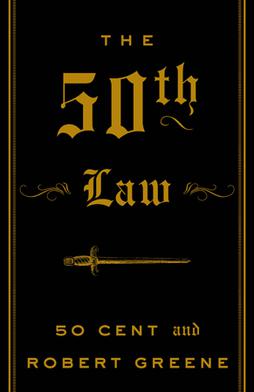
1. “The 50th Law” by 50 Cent and Robert Greene

As a huge supporter of Curtis “50 Cent” Jackson, this book’s release instantly drew me in. Jackson has an interesting story and provides thoughtful pieces of information, with his co-author Robert Greene, to show how he overcame the different challenges he faced growing up in poverty to achieve the success and fame he has today. Although many of us do not come from poverty, the prevailing theme in this book revolves around overcoming our most innate feeling as human beings: fear. Greene and Jackson offer ways to overcome fear and the rewards that come from doing so.


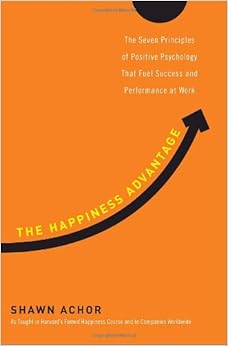
2. “The Happiness Advantage” by Shawn Achor

Shawn Achor nails home an important concept that many people take for granted. You must first be happy with yourself, and your current condition, to fully enjoy the success you may obtain in the future. Some of the most successful people in the world are also said to be the most miserable. Status and money alone will not make you happy. Achor provides firm research in psychology to prove his point for readers who are more science-oriented. This is a good read that keeps your head in the right place as you strive to reach your goals in life.


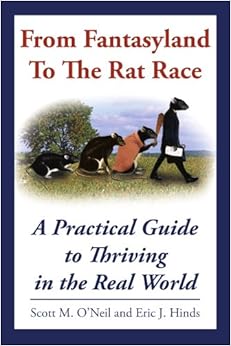
3. “From Fantasyland To The Rat Race” by Scott O' Neil and Eric Hinds

Scott O’Neil and Eric Hinds offer real stories about their time in the business world. Applicable to all professions, the authors remind readers that the real world is a tough place that can be rough for those who do not expect it. They also remind readers that everyone looks out for themselves first and foremost, as you should, and to keep this in mind. They also offer useful tips to avoid in the workplace to reap your professional potential.


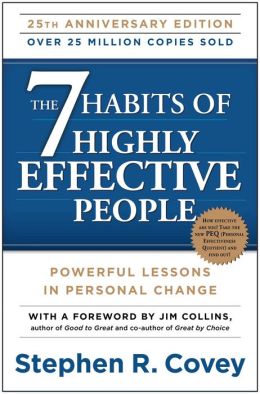
4. “The Seven Habits of Highly Effective People” by Stephen Covey

I was required to read this book’s predecessor in high school. That book was geared toward teens. As a slacker in high school, I was reluctant to read any book, and this one was no different. However, after giving the book a fair shot, I found it to be extremely helpful and I have applied some of its principles throughout my college career. The most recent book, geared more towards adults, has the same structure of the first one and is just as entertaining. Stephen Covey uses the same anecdotal messages in the adult edition as he did in the teens version. Covey provides real world scenarios, which gives the book a novel-like structure.

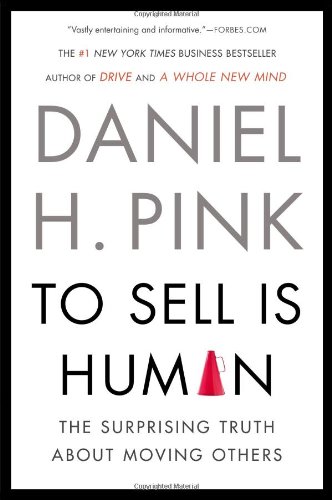
5.  “To Sell is Human” by Daniel Pink

If you can sell in life, whether it be knives, tickets to a sporting event or new products, there is an opportunity to make money. In a similar fashion, young professionals must sell themselves to potential employers. Daniel Pink provides readers with some tips such as the right things to say in your elevator pitch, ways to make your message clearer and much more. This is a helpful book for both people in sales and those who are seeking a career in other avenues.

Wednesday, November 18, 2015

Tiger Style! at the Alliance Theatre


Have you ever sat through a play and realized a few scenes in that the same actors are playing multiple roles? That’s called a dual-role or doubling, a theater technique that took me by surprise in Mike Lew’s latest play, “Tiger Style!” a refreshing portrayal of tiger parenting and the consequences that follow. The fast-paced dialogue and bizarre characterization were my least favorite parts of the play, but the doubling and staging techniques embraced by the cast of five were flawlessly executed. 

Star students and dueling siblings Albert and Jennifer Chen blame their 30-something life crisis on their parents' tiger-style upbringing, a child-rearing method made famous by Amy Chua’s 2011 bestselling book “Battle Hymn of the Tiger Mother.” Much like the provocative novel, director and writer Mike Lew attempted to make a comedic splash in the theater world, but unfortunately his writing fell flat. The dialogue was delivered at lightning-fast speeds and the audience could barely keep up. Watching the two siblings quarrel over their existential life crisis felt like I was holding my breath underwater, hoping for a gasp of air to bring a moment of relief for these hopeless “adults.” 

The play’s hail-Mary was by far the outstanding three supporting actors that managed to change characters throughout the performance. Actor Bobby Labartino is a brusque and tall person in real life, which applies well to the series of characters he portrayed in “Tiger Style!” He went from playing Russ the Bus, a hilarious and ignorant co-worker of Albert’s, to Reggie, the hopeless, rude and immature ex-boyfriend of Jenny, to the security guard at an American customs desk, and several other roles in-between. Despite his prominent demeanor, he managed to fool me until well after Reggie's scene that he was in fact changing outfits and characters entirely. I spent the first half of the play thinking that these characters were different actors, which is an indication of tremendous talent on Labartino’s part. 

Francis Jue is another stand-out actor that portrayed multiple roles in this two-hour performance. He begins the play as a pesky and intrusive fellow Asian-American that tries to pry information from Albert, a role similar to the Chinese government official he portrays later in the play. Sometime in the middle, he manages to fulfill the roles of Albert and Jennifer’s father and a jail guard. His thin gait made his character changes the most apparent. Actress Emily Kuroda is the last of the five-actor ensemble that underwent multiple doubling roles in “Tiger Style!” The audience first sees her as the uptight Asian mother that embodies every aspect of the tiger-style parent. She is a cold portrayal of a tiger-mom, donning a light pink button-up and a fierce “bitch face.” It doesn’t take long for her to transition to Jennifer’s therapist and a long-lost cousin in China as the scenes unfold. 

Aside from the acting, the staging during this performance was excellent. Every scene was executed to perfection and the set-up in each felt just right. The backdrop featured an array of funky L.A. silhouettes and the curtain at intermission went from saying “Tiger Style!” to “Style of the Tiger” in Chinese. Overall, it was impressive how the three supporting actors managed to change characters without a single hiccup, at least as far as the audience noticed. There was a minor glitch with the sound about halfway through the performance, but the cast straightened it out by the end of intermission. “Tiger Style!” may not have had the strongest delivery by the two main sibling characters, but the standout supporting actors created an enjoyable show, with a few laughs in between. 

Tuesday, November 17, 2015

What to Read If You Want...


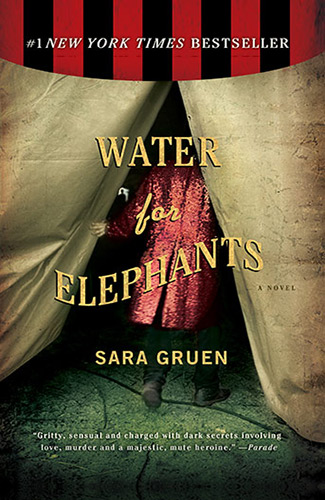
...to break out of teen lit: “Water for Elephants” by Sara Gruen

Many of us almost-adult bookworms are in a weird place, literature wise. We spent childhood wrapped in the warm, colorful embrace of the Barnes & Noble children’s section, where books are neatly separated by age group, reading level and gender, and you can find a stuffed animal to cuddle with as you tear through the seventy-third Captain Underpants book. Then we graduated to the “Young Adult” category, which at my local B&N meant perusing a few shelves directly outside the kid’s section while sipping on a vanilla bean frappuccino and feeling incredibly grown up.

But what now? At 21, I feel icky when I find myself in the teen lit aisle, and it’s gotten hard to take books from a high school freshman’s perspective seriously anymore. At the same time, the regular fiction section isn’t split up as nicely as the kids’ section, and it’s hard to know where to start looking, especially if you have no idea what you’re looking for.

An easy way to get started is with books that have been adapted into movies. Some literary snobs might turn up their noses at this or mutter something about bandwagons, but (usually) popular things are popular for a reason. This strategy opens the door to a large number of books, from classics like “Pride and Prejudice” or “The Great Gatsby” to more current releases like “Gone Girl” or “The Time Traveler’s Wife.” They can be hit or miss as far as how true the adaptation is to the book, but they’re a good way to branch out if you’re stuck in the teen lit rut.

“Water for Elephants” is a Depression-era historical romance told in the narrator’s memories. Jacob Jankowski is a veterinary student who leaves school just short of graduation after being told his parents have died. Distraught and broke, since his parents mortgaged their house to pay his tuition, Jacob runs away and joins the circus as a vet. He falls in love with a performer, Marlena, and does his best to take care of the failing Benzini Brothers Most Spectacular Show on Earth’s animals, subsequently bonding with the new elephant, Rosie. Jacob also tries to stay out of August the equestrian director’s sights to avoid being “red-lighted,” or thrown off the circus train in the middle of the night, but has a hard time with that since August is also Marlena’s husband.

It’s a sweet and heartbreaking read that shows the abuse that went on behind the scenes of circuses, both animal and human. The film adaptation was criticized for a lack of chemistry between Jacob (Robert Pattinson) and Marlena (Reese Witherspoon), and I can’t help but agree that the story and their love comes off the page so much stronger than it does on the screen. If you saw the movie and disliked it, the book is your second chance at a good story. If you liked the movie, you’ll still probably like the book better.

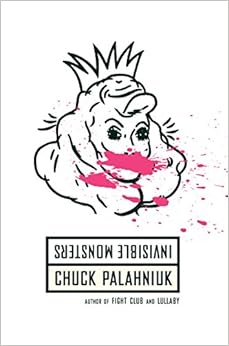
...a head trip: “Invisible Monsters” by Chuck Palahniuk

Let’s be honest, anything Chuck Palahniuk writes is kind of a head trip. “Invisible Monsters” was the first novel he tried to publish, but publishers rejected it because it was so disturbing. That’s actually why Palahniuk wrote “Fight Club”—he tried to disturb the publisher even more for rejecting him and ended up writing his most famous novel. “Invisible Monsters” was eventually released in 1999, and it’s not hard to see how it could’ve been rejected. A model goes from having the seemingly perfect life to practically being invisible when her lower jaw is blown off in a gruesome accident on the freeway, leaving her disfigured and practically mute. In typical Palahniuk fashion, our narrator is mostly nameless, save for some fake identities provided by the equally regal and ratchet Brandy Alexander, Queen Supreme and one vaginoplasty away from a full transition. Also in typical Palahniuk fashion, the story isn’t exactly chronological, but at least in “Invisible Monsters” he has the courtesy to let you know. The first sentence in the second chapter reads: “Don’t expect this to be the kind of story that goes: and then, and then, and then.” It jumps around the narrator’s time in the hospital following her accident, where she meets Brandy; her time spent modeling with her terrible best friend, Evie Cottrell; flashbacks to oddly focused parents and a condom-centered Christmas; and road tripping with Brandy and a man with many names, reinventing themselves all the time to steal drugs from houses they pretend to be interested in buying. The story pushes forward, not appearing to really care if the reader keeps up or not. It unapologetically skips between scenes not just between chapters, but also sometimes between paragraphs. It makes brutally honest observations of human nature, like “no matter how much you think you love somebody, you’ll step back when the pool of their blood edges up too close,” and in the next breath remarks how nice of a day it is. It’s Chuck Palahniuk at his finest.

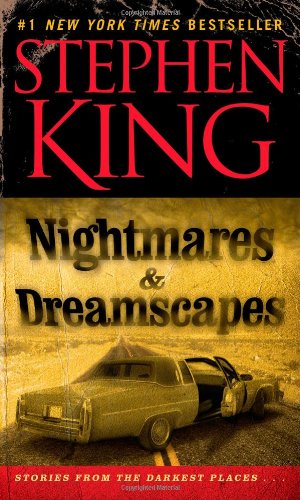
...to read Stephen King, but don’t know where to start: “Nightmares and Dreamscapes” by Stephen King

Stephen King is both polarizing and daunting. Readers seem to either think he’s a hack or love his storytelling, or else only know him for his works that have been adapted to film. But if you don’t yet have an opinion, where do you start? His Dark Tower series means an eight-book commitment; the buildups in some of his more famous works are probably wasted on you if you know the gist of the story; and the Stephen King section of the bookstore has way too many options.

My introduction to Stephen King was through his short stories. I read “Just After Sunset” first, a collection I jumped around in and never truly finished, always seeming to come back to one particular story whenever I picked it up. When my dad realized I’d delved into one of his favorite author’s work, he presented me with a copy of “Nightmares and Dreamscapes” and offered up his other tomes if I liked what I read.

I did like what I read. The collection of short stories begins with “Dolan’s Cadillac,” the tale of an unassuming teacher exacting dirty, calculated revenge on a Las Vegas gangster for his wife’s death. It’s the kind of story a reader can get behind—good versus evil, rooting for the little guy and a plan for the bad guy to get what he deserves. “The House on Maple Street” is another story in this collection with that kind of feeling. The four Bradbury children discover that something has happened to their house while their family spent the summer abroad, and changes are happening very quickly. The oldest child, Trent, realizes that this mysterious transformation is an opportunity to rid the kids and their mother of Lew, their abrasive and abusive stepfather. King takes a stab at playing Arthur Conan Doyle in “The Doctor’s Case,” telling his own Sherlock tale where Watson steals the show.

Most of the stories are far deeper into the horror genre than these three. “The Night Flier” and “Popsy” feature vampires, a pregnant woman tackles zombies in “Home Delivery” and in “Rainy Season,” a young couple finds themselves to be the latest sacrifice in a small Maine town. “Sorry, Right Number” is horrific in a more heartbreaking way than a scary way, and its screenplay style makes it move a lot quicker than many of King’s works. A set of novelty teeth proves to be the best $3.50 a man ever spends in “Chattery Teeth,” and a couple encounters Rock and Roll Heaven (or hell) in the middle of nowhere, Oregon.

They’re not all winners. King himself notes that “Head Down” is an essay, and while it’s sweet to read about his coaching stint while his kid played Little League, it doesn’t exactly fit with the rest of the stories. I mostly liked Martha’s character in “Dedication,” but it’s hard to get past what she does with the hotel sheets she’s supposed to be tidying. Overall, though, “Nightmares and Dreamscapes” shows off King’s flair for the short story and offers new readers a taste of the worlds he can craft.

Overrated Classics


"1984" by George Orwell

In a general view, "1984" is a good book, especially during today’s time of fear and paranoia about the government. Big Brother, the totalitarian leader, is a term that is still thrown around today. The book, although maybe not intentionally, teaches the reader to be mindful of what is going on in your surroundings. But the real problem in the book is the slow and boring buildup. There's a feeling of fear throughout the novel, but it never felt like enough to me. In this story where the government has an unlimited amount of power, I would be much more hesitant to disobey for whatever could happen to me. Winston and Julia, two of the main characters, are tortured for their crimes, but left alive. When I first read this book and knew about the all-powerful government, I expected a society that acted like robots. They did as they were told, or they would be killed. That wasn’t the situation in 1984, and I feel that it ruined the true sense of fear that should have been shown.


"Frankenstein" by Mary Shelley

"Frankenstein" is another example of a novel that had a great idea and will always have a long-lasting legacy, but could have been executed better. It is possibly one of the earliest examples of science fiction and created an archetype for hideous and terrifying monsters that are still created today. But the issues I have with this novel are Victor Frankenstein's behavior every situation, and Mary Shelley’s writing style. First off, a common misconception is that Frankenstein is  the monster, while he is actually the doctor who created him. This isn’t Shelley’s fault, but giving the monster an actual name rather than just referring to him as "creature" or "monster" would have been better. The argument could be made that not naming the monster created a further lack of identity for the monster, but I believe other elements could have been used to strengthen that issue while still giving him a name. The monster is such a legendary character created by Frankenstein, who is essentially his father, that it’s silly to think that he went unnamed. Imagine if Dracula wasn’t named and was known as "vampire" or "monster" instead. It would tarnish the fear that character instills. Also, Frankenstein makes endless mistakes along his way and indirectly causes the death of many friends and family. First, the monster murders Frankenstein’s brother, and this leads to the death of the nanny who is believed to be the killer. Had Frankenstein come forward and revealed his creation, she (as well as many other lives) could have been saved. He also decided against creating a female counterpart for the monster, which led to the death of Henry Clerval, Frankenstein’s friend. Then, as Frankenstein is set to marry his wife, he leaves his soon-to-be-wife behind to look for the monster, only for it to kill her amidst the search. As for Shelley’s writing style, it is weak to say the least. She wrote it at the age of 18 and you can sense the youthfulness of her writing.


"Metamorphosis" by Franz Kafka

Franz Kafka’s "Metamorphosis" is a terribly sad story about a man who undergoes a transformation into an insect-like creature and the effects it has on his family. Gregor Samsa, the man who undergoes the transformation, is described as a very giving man, providing the main source of income for his parents and his sister. But when he misses work (uncharacteristic of him), his parents come to check on him. His parents see that he is turning into a hideous creature and no longer care for him. His sister, Greta, initially cares for him, but then quickly becomes tired of it. As Gregor continues to change into this creature, more people are disgusted and afraid of him. Eventually, Gregor dies and his family is grateful that they don’t have to deal with him anymore. "Metamorphosis" is a beloved book by many book-readers, but after reading, I couldn’t help but think to myself, “What made people enjoy this book so much?” From the beginning, we can notice how little love Gregor gets from his family, even though he does so much for them. There is never a sense of appreciation, evidenced by the fact that they are happy when he finally dies. It's uplifting for the moments when Gregor accepts his transformation and enjoys climbing the walls and hanging from the ceilings, but then he goes back into a depressive state and leaves himself to die and rid himself from his family. As a whole, I see this book as the depressive downward spiral of an unappreciated man and how he struggles to cope with the change. Maybe I was expecting it to be more exciting and not purely depressing, but I fail to see how this is considered a top-tier work of fiction.


"Medea" by Euripides

Euripides brings together the common themes of Greek tragedies of death, murder, betrayal and family issues in Medea. When Medea finds out that her husband, Jason, is set to marry a royal princess, she creates an ultimate plan of vengeance to overcome her grief. First, she poisons her husband’s future bride and the bride's father during the wedding. Then, she takes it to the highest level and decides to murder her own children because she feels it is the best way to harm Jason. She is willing to destroy the family that they created because Jason has no problem with leaving them behind. Eventually, Medea flees to Athens with the bodies of her children, proud of what she has done to Jason. This play to me is nothing more than a story of a psychotic woman who is unable to cope with someone leaving her. Obviously no one ever wants to have their heart broken, but the actions by Medea are so extreme, it becomes impossible to enjoy or believe. The only thing I can say I enjoyed from the play is the willpower of Medea. To actually go through with something like this shows how much she wanted to harm Jason, no matter what the sacrifices were. Maybe these tragedies aren’t for me, but I would much rather read about Romeo and Juliet killing themselves out of love for each other instead of an insane woman who will do anything to find revenge.


"The Scarlet Letter" by Nathaniel Hawthorne

"The Scarlet Letter's" placement on this list is surely going to be disagreed upon by many, but it was a very boring novel to me. Hester Prynne is required to wear a scarlet “A” on her chest for committing adultery. The entire community that she lives in shuns and shames her for act, although she doesn’t let it bother her too much. She lives in a cottage and earns a steady pay doing needlework. As the story goes on, it is eventually revealed that a priest also bears the scarlet letter. The man ends up being Hester’s lover, and he reveals the truth to the town in a sermon, but dies in her arms as she kisses him. My main issue with this book is the slow buildup. There were only a few key moments in the book where it really caught my attention, like when it's revealed the priest has a scarlet letter as well. Hester takes her shame very well, and that is admirable, but it made for a boring story. I feel as if there wasn't enough conflict and discipline for her crimes, as wearing the letter didn't seem to do enough.